Cash Stuffing for Beginners: Does It Actually Work?
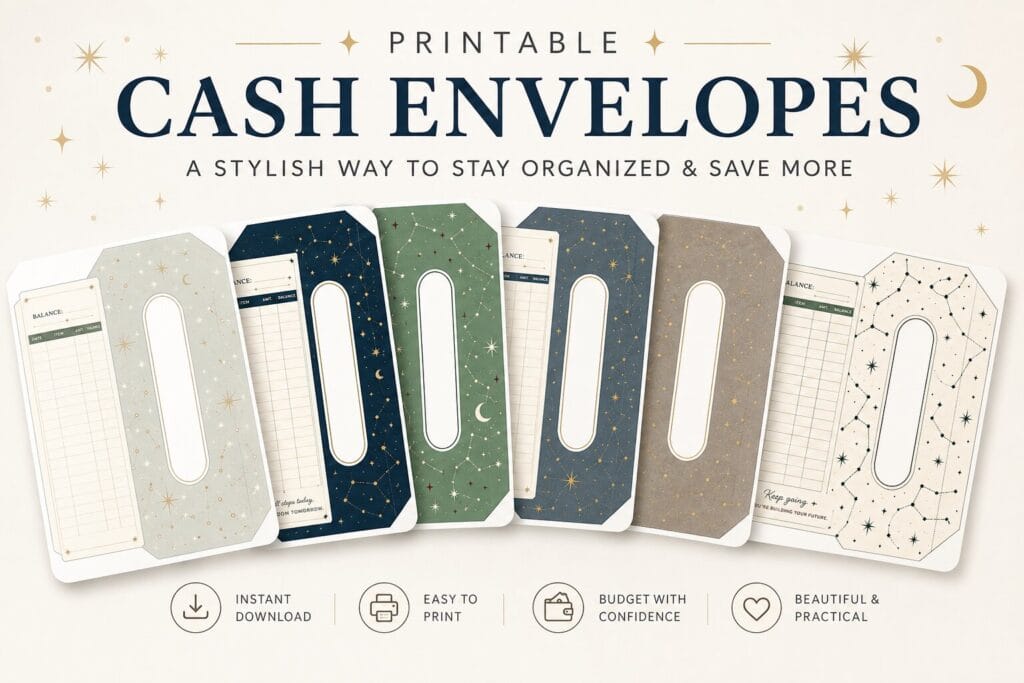
Six envelope templates with ledger cards on the back. Print them at home, fold, done!
ONE MORE FREE THING
Got the envelopes? Here’s the budget behind them.
A one-page monthly plan with sinking funds built in. It’s what the envelopes get filled from.
No spam. Unsubscribe any time.
Be honest: when’s the last time you checked your bank balance and had absolutely no idea how it got that low?
(No judgment. I have stared at a banking app convinced I’d been hacked, only to realize the real culprit was me, three iced coffees and a “just one candle” Target run.)
That gap between what you meant to spend and what left your account is exactly what cash stuffing is built to close. It is not a new idea, it was not invented by a 22-year-old in her dorm room, and it does not require an app, a spreadsheet, or a finance degree.
It requires envelopes, cash, and a little bit of stubbornness. I have all three, and it is still the only budgeting method I have ever managed to stick with for more than a month.
What is cash stuffing, actually?
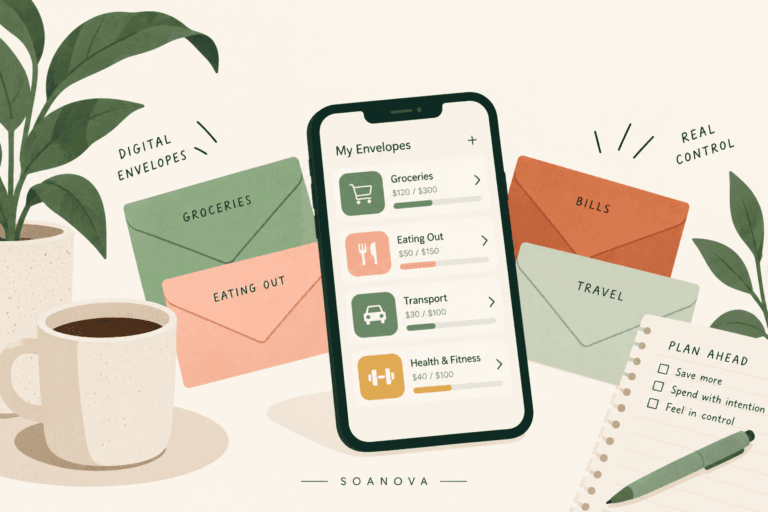
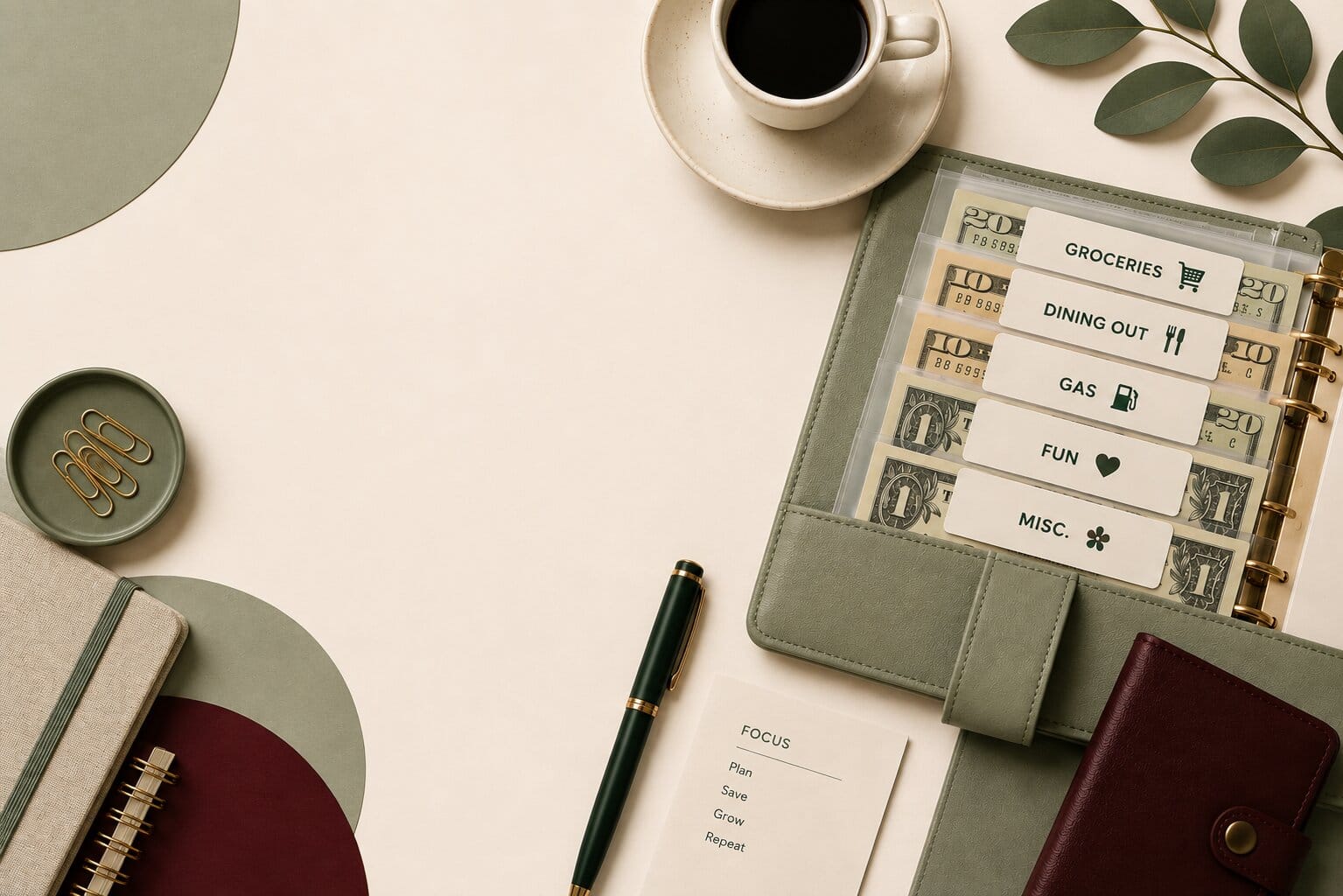
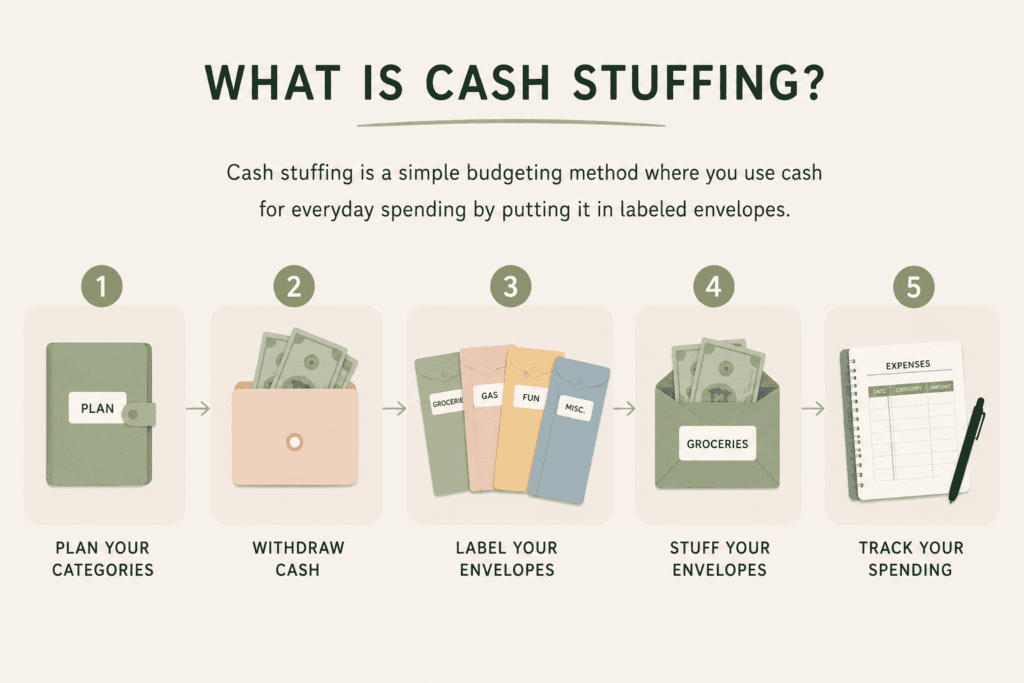
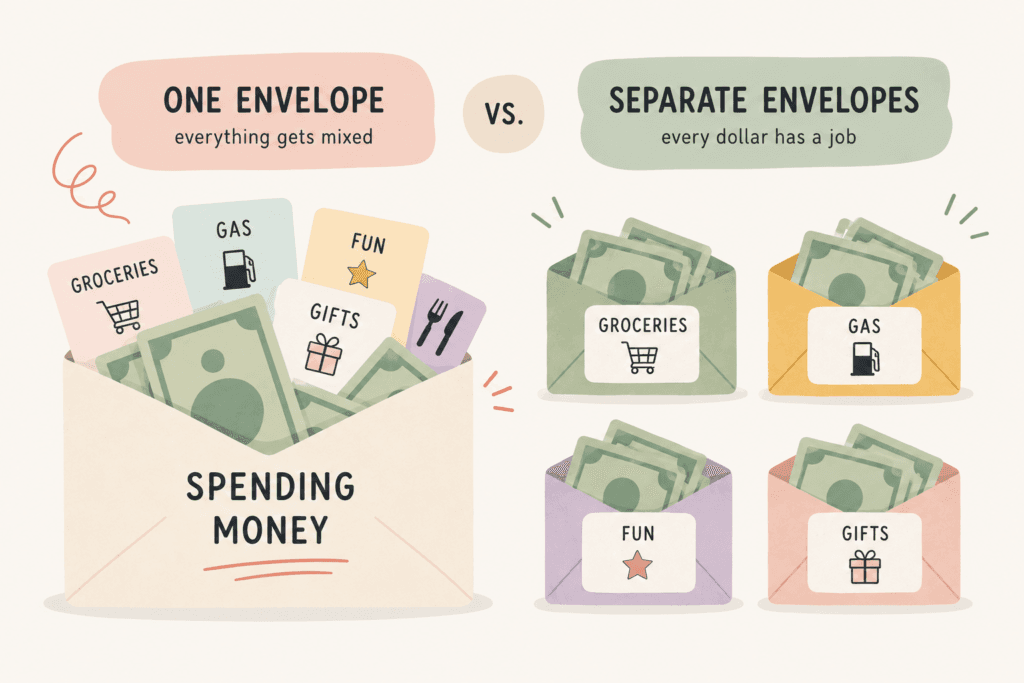
Cash stuffing is the practice of pulling out cash at the start of the month, or each payday, and dividing it into labeled envelopes for different spending categories: groceries, gas, fun money, whatever your budget needs.
You spend only what is in the envelope. When it is empty, that category is done for the month. No exceptions, no “I’ll just put it on the card this once” (a sentence I have said to myself more times than I would like to admit).
If that sounds familiar, it should. Envelope budgeting has been around since at least the Great Depression, when families stretched every dollar by physically dividing it up. Dave Ramsey did not invent it, and he has said as much himself, he just popularized it decades later inside his own budgeting framework.
What’s new is the packaging: pastel envelopes, aesthetic binders, and a few million TikTok videos of people slapping stickers on a “groceries” pouch. I will admit the aesthetic part is at least half of why I got into this myself.
No app.
No password.
No forgotten subscription quietly draining your account.
Just cash, and a plan for where it goes.
Why does cash work better than a card?
This is not just a vibe, and it is not just me being nostalgic for a system my grandmother used. There is real research behind why handing over a $20 bill feels different than tapping a card, and it comes down to something behavioral economists call the pain of paying.
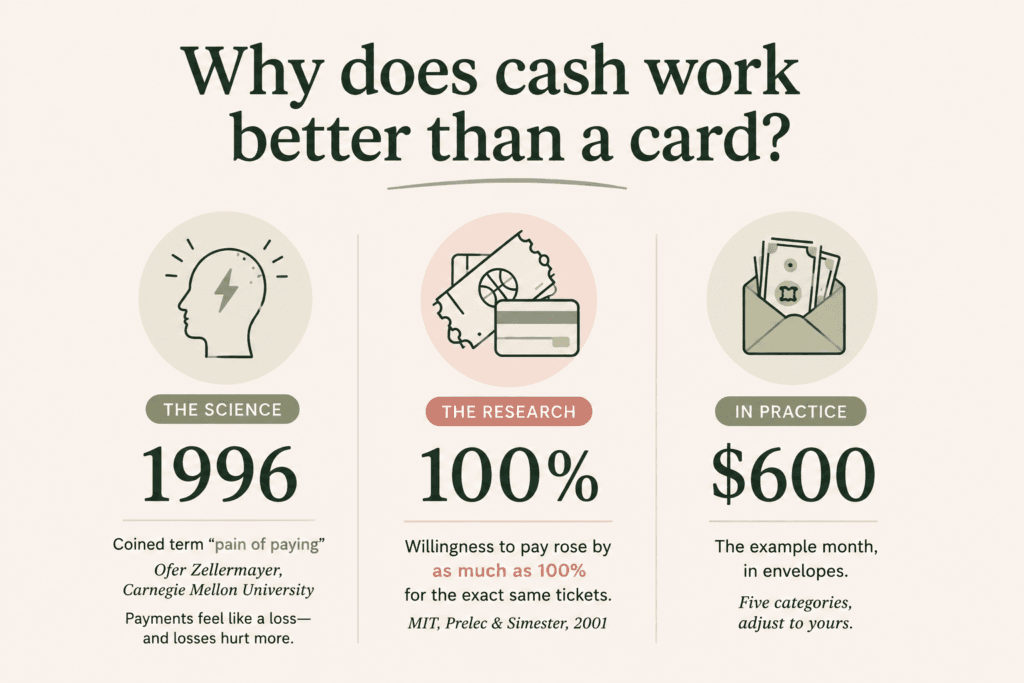
The term was coined in 1996 by researcher Ofer Zellermayer at Carnegie Mellon University, and the idea is pretty intuitive once you hear it: every payment registers as a small loss, and because we are loss averse (we feel losses more sharply than we feel equivalent gains), that loss triggers a little jolt of discomfort.
Cash makes the jolt immediate and impossible to ignore. Cards let you feel it later, if you feel it at all. (Here is a plain-English summary of the pain of paying if you want the deeper version.)
The clearest demonstration of this I have come across is a study out of MIT. Researchers Drazen Prelec and Duncan Simester ran a sealed bid auction for sold out Boston Celtics tickets, and published the results in Marketing Letters in 2001.
Half the bidders were told they would pay in cash if they won, the other half by credit card.
Willingness to pay rose by as much as 100% for the exact same tickets!
Same seats, same game, nearly double the willingness to spend, just because the payment method changed. I think about that study every time I am tempted to tap my card for something I would never hand over cash for.
A separate study, published in the Journal of Experimental Psychology: Applied and titled “Monopoly Money”, found something similar: people were willing to spend more when a credit card logo was simply present versus absent, before any card even changed hands.
The more abstract the payment feels, the easier it is to talk yourself into “just this once.”
Cash does not have that problem. You can watch it run out. That is the entire mechanism, and it is also why cash stuffing works even for people, me included, who have downloaded and quietly abandoned every budgeting app in the App Store.
Quick tip: if you are ready to try this, grab Soanova’s free printable cash envelope pack, six designs with a built-in ledger card so you can log what goes in and out without opening a single app.
How to start cash stuffing this week
You do not need to overhaul your entire financial life to try this. Here is the version I would tell a friend to follow, mistakes and all.
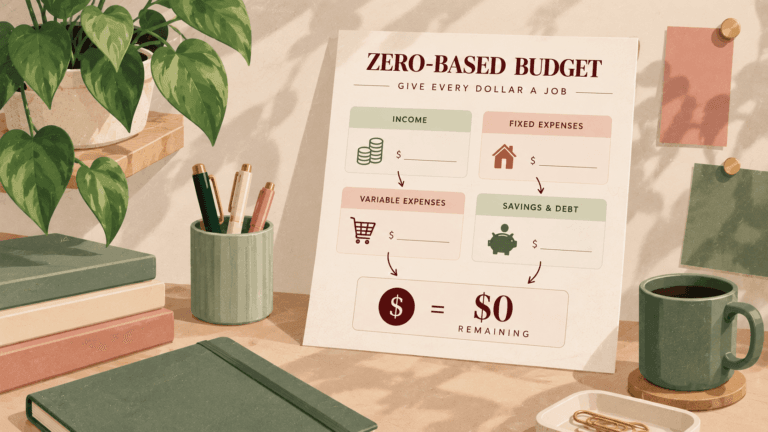
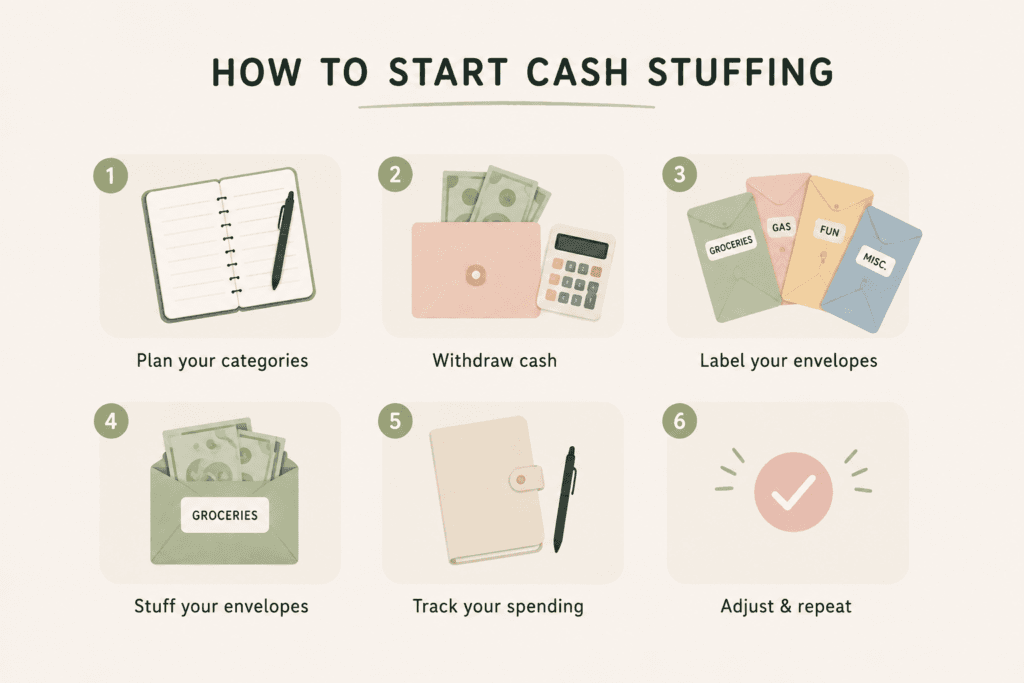
- Build your budget first. Cash stuffing is a delivery system for a budget you already have, not a replacement for making one. If you do not have a budget yet, start with a zero-based budget so every dollar has a job before it hits an envelope.
- Pick your categories, and keep them variable. Cash stuffing shines for spending that fluctuates: groceries, gas, restaurants, personal care, gifts, “fun money.” Fixed bills like rent, your phone plan, or a subscription are usually better left on autopay from your bank account, since missing one of those has real consequences a late cash envelope does not. I learned this the hard way after I tried to cash stuff my car insurance and nearly missed a payment because the envelope was, embarrassingly, in my other coat.
- Label your envelopes. This is where the printable pack earns its keep. Instead of scavenging blank envelopes from my junk drawer like I did the first month, each design comes with a ledger card built right in, so you can jot the date, the item, and your running balance as you go.
- Withdraw and stuff. On payday, pull the total amount you have budgeted for cash categories and divide it into the labeled envelopes. Some people do this once a month, others split it by paycheck. I do mine every payday, mostly because a full month of cash sitting in my apartment makes me nervous.
- Spend only what is there. This is the entire system. When the groceries envelope is empty, you are done grocery shopping for the month, or you are cooking from what is already in your pantry. My pantry has gotten a lot more creative since I started.
- Decide what happens to leftovers. If an envelope still has cash at month end, you can roll it forward, sweep it into savings, or treat it as a small win. I sweep mine straight into savings, because if I leave it in the envelope it mysteriously becomes iced coffee money by the fifteenth of the next month.
- Repeat, and adjust. Your first month’s category amounts are a guess, mine certainly were. If groceries run out by the 20th every time, that envelope needs more money and something else probably needs less.
Here is what that might look like for someone bringing home roughly $3,000 a month, with fixed bills already paid from the bank account and $600 left over for variable, cash stuffed categories. Treat this as a starting point to adjust, not a rule, since my own split looks nothing like it.
| Envelope | Suggested amount | Notes |
|---|---|---|
| Groceries | $300 | The category most people underestimate first |
| Gas and transportation | $100 | Adjust for commute distance |
| Restaurants and takeout | $100 | The easiest place to find extra breathing room |
| Personal care | $50 | Haircuts, toiletries, small extras |
| Gifts and miscellaneous | $50 | Keeps a birthday from wrecking your grocery budget |
Here is what I’d tell you if we were talking in person
Cash stuffing has a real, well documented psychological benefit, and I would not have written two thousand words about it otherwise. It also has real downsides, and most articles on this topic gloss right over them. I would rather you hear it from me now than find out the hard way.
The part nobody puts in the aesthetic videos. Cash sitting in an envelope has none of the protections your bank account has. Money in an FDIC insured bank or NCUA insured credit union is protected up to $250,000 per depositor if the bank fails.
Cash in a drawer has no equivalent backstop, and if it is lost, stolen, or destroyed in a fire, it is very likely gone for good. Homeowners’ and renters’ insurance typically only covers about $200 worth of cash loss, which will not go far if you are keeping a full month of envelopes on hand.
I keep this in mind every time I am tempted to withdraw more than I need.
There is also an opportunity cost. Cash sitting in an envelope earns zero interest, while the same money in a high-yield savings account would be earning something, and it slowly loses purchasing power to inflation the longer it sits there.
You will not build credit or earn rewards on a cash purchase either, which matters if you are also trying to build a credit history.
My honest take, after doing this myself for a while now: cash stuffing works best as one tool, not your entire financial system. I keep the bulk of my safety net in a high-yield account and only cash stuff the categories where I personally overspend, which for me is groceries and eating out, every single time, without fail.
Use cash envelopes for the specific, variable categories where you tend to overspend, and keep everything else in an insured, interest-bearing account. That ledger card in the printable pack helps close part of the record-keeping gap too, since you are logging every withdrawal by hand instead of losing track of what you pulled out and when.
I have, more than once, found a stuffed envelope in a coat pocket months later. It was supposed to be December’s gift money. I found it in March.
Is cash stuffing for you?
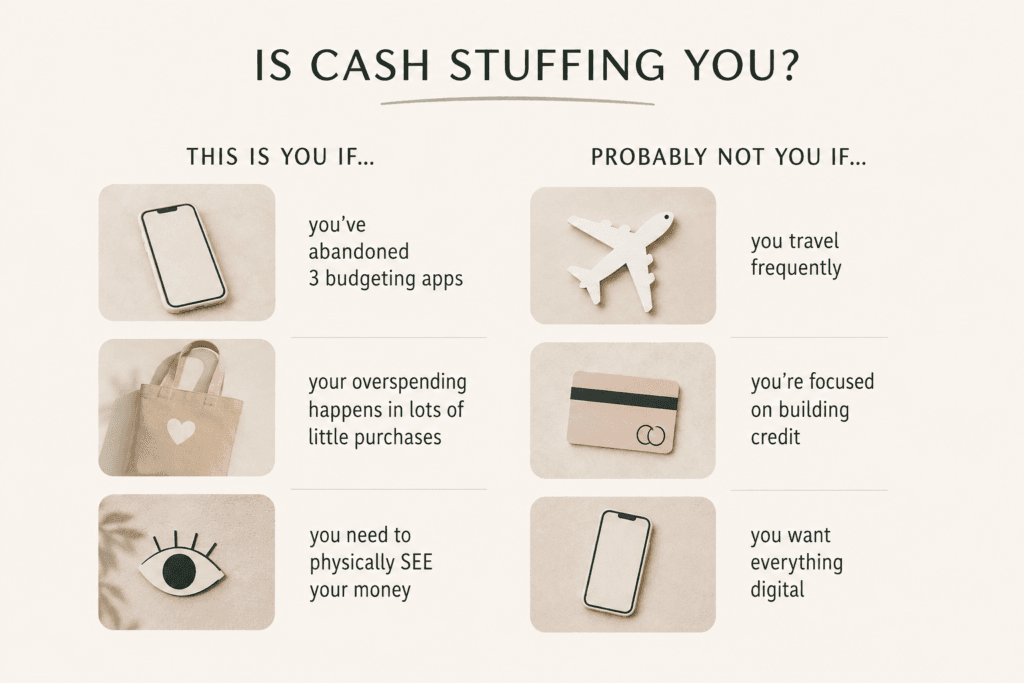
None of that is a character flaw, and I say that as someone who tried three different budgeting apps before landing on paper envelopes. It just means a hybrid approach, mostly digital with one or two cash envelopes for your trickiest categories, will probably serve you better than going all in.
Cash stuffing FAQ
Is cash stuffing safe?
It is reasonably safe for small, spendable amounts, but it is not a substitute for a bank account. Keep your emergency fund and savings goals in an FDIC or NCUA insured account, and treat your cash envelopes as walking around money for the current month only, not a long-term store of value.
I would not feel comfortable keeping more than that in cash at home, and I do not.
How much cash should I keep in my envelopes at once?
Only what you have budgeted to spend in that category before your next paycheck. If you find yourself holding several months of envelopes at once, that is a sign to move the excess into a proper savings account. I check mine every payday for exactly this reason.
What if I get paid irregularly, or twice a month?
Stuff your envelopes each time you get paid rather than once a month. Divide your monthly category totals by however many paychecks you receive, and top off each envelope on payday. This is what I do myself, and it has kept me from ever having an empty envelope stare back at me mid month.
Can I combine cash stuffing with a savings account?
Yes, and honestly, most people should. I do. Use envelopes for the day to day categories where seeing cash disappear changes your behavior, and keep savings, emergency funds, and anything you are not touching this month in an interest-bearing account instead.
Where to start
Grab a budget.
Grab some envelopes.
Start with just two or three categories, not twelve.
You do not need a perfect system on month one. I certainly did not have one, and my grocery envelope ran dry by the 18th more than once before I got the amounts right.
You need a system you will open again in month two. If you want a head start, the printable pack comes with six designs and a built-in ledger, so all you need to bring is the cash and the follow-through.